
Remember the old trick of blowing into Nintendo cartridges until they finally worked?
Game not loading? Blow on it. Still frozen? Blow harder.
If that didn't do the job, you gave the console a firm smack.
Back then, we thought that counted as tech expertise.
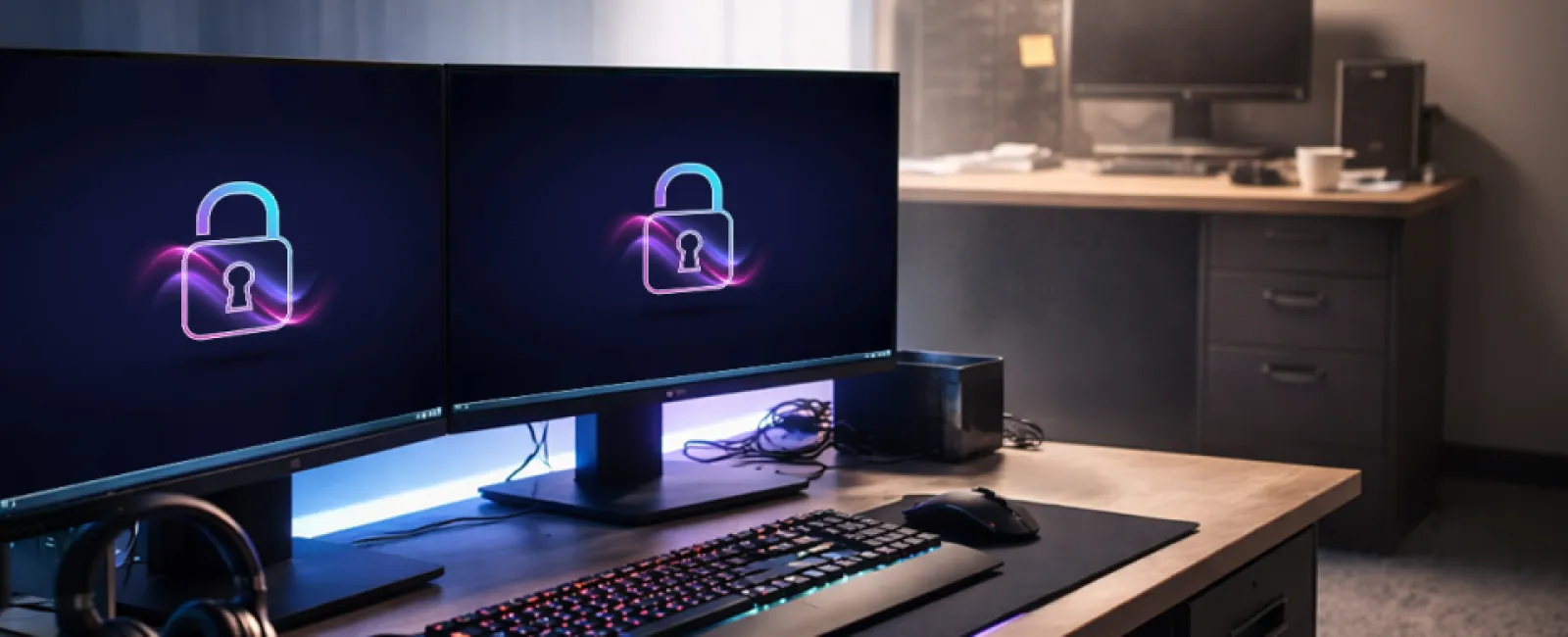
But your kid? They've never had to fix a machine by hitting it. Their bedroom setup runs on a solid-state drive, 32 gigs of RAM, a processor powerful enough to render a short film, mesh Wi-Fi that wipes out dead zones, live performance tracking, and multi-factor authentication on every account.
It's built for speed, stability, and security.
Now compare that to your office.
There's a 2019 workstation that needs four minutes just to start. A printer that jams every Tuesday like it's on schedule. Shared folders named "New New Final FINAL." Systems that barely communicate. Wi-Fi that dies in the conference room for no obvious reason. And a laptop with a "Restart to update" reminder that's been ignored for weeks.
Gamers optimize. Businesses put up with it.
That difference costs more than most organizations realize.
Why Gamers Stay Ahead
This isn't really about budget. A solid gaming PC often costs about what a business workstation does. Business internet is usually faster than residential service. Security and monitoring tools for a company network are not out of reach.
The real difference is discipline.
Gamers patch immediately. Operating system updates, GPU drivers, firmware, game fixes — they install them fast because old software causes lag, and lag means losing. Your kid probably installed the latest update at 11:30 PM on a school night because they couldn't stand waiting.
In contrast, every deferred update sitting on your office devices is a known risk. The vendor already identified the issue and released a fix. Your company just hasn't applied it yet.
Gamers also back up save files like their progress depends on it — because it does. Lose a 200-hour save once and you never forget. Nationwide Insurance reports that about 68% of small businesses do not have a documented disaster recovery plan. When a gamer loses data, it's progress in a digital world. When a business loses data, it can mean lost client records, financial history, and even the ability to keep operating.
They track performance in real time too. CPU temperature, frame rates, latency, disk usage. They spot a 3% dip and start investigating before it becomes a problem. Most business owners only learn something is wrong when someone says, "The internet's slow today." That's not monitoring. That's reacting after the fact.
Your kid would never let their setup run that way. And their setup isn't responsible for payroll.
How This Mess Happens
No one intends to build a chaotic office network.
Technology in business usually grows piece by piece. One tool is added to solve a problem. Then accounting gets its own platform. Then CRM. Then file sharing. Then payroll. Then another security layer gets stacked on top.
None of those choices was necessarily wrong. But over time, technology stops being designed and starts being collected. And once systems are collected instead of planned, friction follows.
Gaming rigs are intentionally tuned for performance. Many business systems are assembled gradually for convenience. One is a strategy. The other is drift. And drift eventually becomes expensive.
When we were blowing on cartridges, we didn't know better. Your business does know better. The tools exist. The knowledge exists. The only question is whether someone is paying attention.
The Hidden Price Tag
The true cost usually doesn't arrive as one dramatic outage. It shows up as the small frustrations people have learned to accept.
Five minutes waiting for a slow login. Three minutes hunting for a file saved in the wrong folder. Manually entering the same data into systems that don't sync. Restarting the same computer twice a week. Building workarounds because "that's just how it is here."
Those issues feel minor on their own. But a UC Irvine study found that it takes an average of 23 minutes to fully regain focus after an interruption. So those five-minute tech delays don't cost five minutes. They cost much closer to 30.
Now multiply that across your team, five days a week, all year long. At that point, it's not a nuisance anymore. It's thousands of lost hours hiding in everyday operations.
In gaming, lag is a deal-breaker. In business, lag becomes normal. And "normal" is one of the most expensive settings in technology.
The Real Question
Ask most business owners about their technology, and you'll hear some version of "it works fine."
But functional and efficient are not the same thing.
Are your tools truly integrated, or are they just living side by side? Are your systems streamlined, or are they layered on top of one another? Is your technology supporting your workflow, or are your people working around it? Is anyone watching your network the way a gamer watches frame rate — constantly and proactively, before the crash happens?
Hardware comes and goes. What drives real productivity today is software, automation, security, and workflow design. None of those improve by accident.
A Fast Self-Check
Before you move on, ask yourself these questions:
·
Do you know when your oldest office computer was purchased?
·
Do you know whether your backups completed successfully last week?
·
Is there a device on your network right now with an ignored update older than a week?
· Could you tell me your office internet speed without checking?
Your kid could answer all four questions about their gaming setup without hesitation.
If you can't answer them for the systems your business depends on, that's not a disaster. It just means attention has been missing. And that can be fixed.
How We Help
We help businesses move from accumulation to optimization. That starts by taking a holistic look at your technology — what is redundant, what is outdated, what is slowing you down, and what can be simplified or automated.
The goal isn't more technology. It's better technology.
If you'd like to review how your systems, software, and processes are affecting productivity and profitability — or where they may be quietly draining both — we'd be glad to talk.
No jargon. No pressure. No gamer metaphors required.
Click here or give us a call at 801-356-9333 to schedule your free 15-Minute Discovery Call.
And if this reminded you of another business owner putting up with more lag than they should, go ahead and share it.
In business — just like in gaming — performance matters.