
Imagine you're three hours into a five-hour road trip to see family for the holidays. Suddenly, your daughter asks, "Can I play Roblox on your laptop?"—your work laptop, filled with client files, financial records, and sensitive business data. You're worn out from all the packing, still have three hours ahead, and honestly, letting her play sounds like the easiest way to keep her happy. But is it safe?
Here's the truth: holiday travel introduces unique security risks you rarely face in everyday life. Fatigue, distractions, connecting to unfamiliar networks, and juggling family time with quick work check-ins all increase vulnerability. Whether your trip is for business, vacation, or a blend of both, this guide shows you how to secure your data without spoiling the festive fun.
Pre-Trip Essentials: Quick 15-Minute Setup
Spend just 15 minutes before your journey to safeguard your devices:
Device fundamentals:
- Install the latest security patches and updates
- Back up all critical files to a secure cloud service
- Set your screen to auto-lock after no more than two minutes
- Activate "Find My Device" on all phones and laptops
- Fully charge your portable power bank
- Bring your own chargers and adapters to avoid last-minute hassles
Preparing the family:
- Clearly communicate which devices kids can use—and which are off-limits
- Provide a separate family tablet or secondary device for entertainment
- Create distinct user profiles on your laptop if children must use it
Pro tip: If your children need screen time on the road, bring a tablet unlinked to your work accounts. Investing in a $150 iPad is far cheaper than recovering from a data breach.
Hotel WiFi: A Common But Risky Pitfall
Upon arrival, everyone connects instantly to the hotel WiFi—phones, tablets, laptops, and gaming devices alike. Your teenager streams Netflix, your spouse checks emails, and you scramble to finalize a meeting proposal.
The catch? Hotel networks are open to hundreds of guests, some with less-than-honest intentions.
Real-life example: A family unknowingly connected to a fake hotel WiFi network set up in the parking lot, exposing every password, credit card number, and email they transmitted over two days.
Keep your connection secure:
Confirm the exact network name with the front desk—never assume.
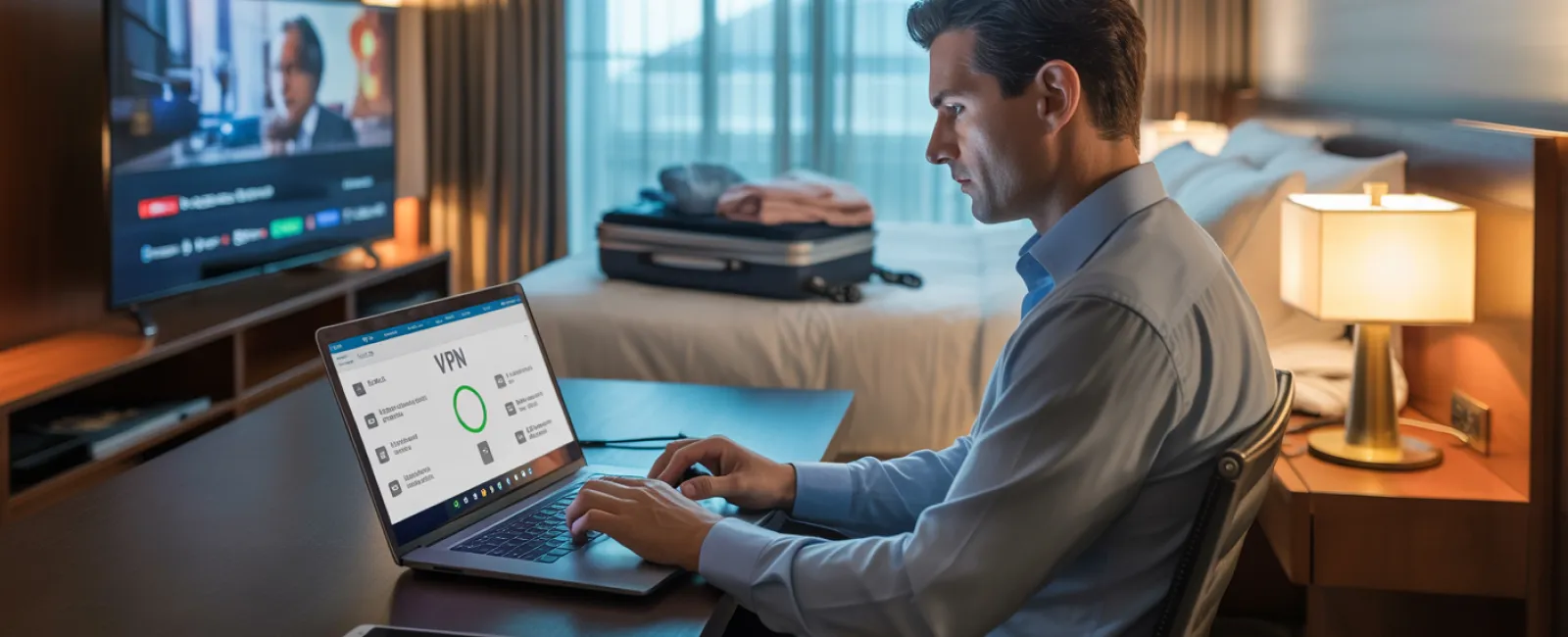
Use a VPN for work access—it encrypts your online activity, shielding company emails and files.
Rely on your phone's hotspot for sensitive tasks like banking or handling confidential client info.
Keep entertainment and work separate: Kids can enjoy hotel WiFi for videos, but handle work through a secure, private connection.
The Dilemma of Kids Using Your Work Laptop
Your work laptop contains everything—emails, financial systems, client data—yet your kids want to watch videos, play games, or video chat.
Why it's risky: Children often download apps, click pop-ups, share passwords, or forget to log out. While innocent, these actions expose your device to threats.
How to handle it:
Firmly say no to letting kids use work devices. Offer them an alternative device and stick to this rule.
If sharing is unavoidable:
- Set up a restricted user account
- Supervise their activities closely
- Disallow downloads
- Never save their passwords on your device
- Clear all browsing history after use
Better alternative: Travel with a dedicated family device, even an older tablet or laptop that remains disconnected from work networks.
Watching Streaming Services on Hotel TVs: Always Log Out
The family wants to stream a movie on the hotel's smart TV. Someone logs into your Netflix account but forgets to log out before checkout.
Potential fallout: The next guest gains access to your account. Even worse, if you reuse passwords across platforms (please don't), this slip could lead to further breaches.
How to avoid this:
- Use your personal device and cast content to the TV for safer streaming
- If logging into hotel TVs, set a reminder on your phone to log out before checkout
- Even better: Download shows to your device beforehand and skip the hotel TV entirely
Never sign into these on hotel TVs:
- Banking applications
- Work-related accounts
- Email platforms
- Social media accounts
- Any accounts storing payment details
Lost Device? Act Fast
Travel chaos often leads to lost devices—in restaurants, hotel rooms, rental cars, or airports. If your device disappears…
Within the first hour, you should:
- Use "Find My Device" functionality to locate it
- If retrieval isn't possible, immediately remotely lock the device
- Change critical account passwords from another device
- Notify your IT support or managed service provider to revoke system access
- Alert affected stakeholders if sensitive business data was stored on it
Before you travel, ensure your device includes:
- Remote tracking features activated
- Strong, unique password protection
- Automatic encryption for stored data
- Remote wipe capability to erase data if necessary
If a family member loses a device, apply the same steps immediately.
Avoid the Rental Car Data Trap
Connecting your phone to a rental car's Bluetooth to play music or get directions is convenient, but beware: these systems often store your contacts, call history, and even text previews.
When you return the vehicle, that data usually remains accessible to the next driver.
Quick 30-second steps before handing back the car:
- Remove your phone from the car's Bluetooth settings
- Clear recent GPS destinations
- Or bypass Bluetooth altogether by using an aux cable or not connecting at all
Managing Work-Life Balance During Holiday Trips
You promised quality family time but find yourself checking emails incessantly, taking work calls during activities, and spending hours on your laptop while others enjoy mini-golf.
This intermittent multitasking hurting not just relationships but your security awareness—fatigue and distraction make mistakes more likely.
Here's the truth: If unplugging completely isn't an option, establish clear boundaries:
- Limit work email checks to two scheduled times per day
- Use your phone's hotspot instead of hotel WiFi for all work-related tasks
- Work privately in your hotel room, avoiding public areas
- Give your full attention to your family while together—no multitasking
But the best recommendation? Take genuine time off. Your business will survive a week, and you'll return sharper and more security-conscious.
Adopting a Security-First Mindset for Holiday Travel
Balancing work and family on holiday trips is challenging. Sometimes your child really needs your laptop, or you must urgently check work emails—even when your spouse is driving.
Perfection isn't the goal; intentional risk management is:
- Prepare your devices before departure
- Recognize which actions carry high risk (like hotel WiFi for banking) versus low risk (using your own hotspot for email)
- Set clear boundaries between work and family digital activities
- Have a contingency plan for breaches or lost devices
- Know when to firmly say, "Not on this device" and stick to it
Make This Holiday Season Secure and Stress-Free
The holidays should focus on joyful moments with loved ones—not on data breaches or client apologies.
With simple preparation and sensible rules, you can protect your business's sensitive data without spoiling the family fun. Everyone wins—security stays solid, and your family enjoys the holiday experience.
Need help creating travel security plans for your team and yourself? Click here or give us a call at 801-356-9333 to book a free 15-Minute Discovery Call with us. We'll help you create practical policies that protect your business without making travel impossible.
Because the best holiday stories shouldn't include "Remember when Dad's laptop got hacked?"